Auto Insurance in the USA: Types, Coverage and Costs
Auto insurance in the USA helps drivers manage the financial risks associated with car accidents, vehicle damage, injuries, and certain other unexpected events. Whether you own a new vehicle, drive an older car, or have recently obtained a driver’s license, understanding your insurance policy can help you make more informed decisions. However, auto insurance is not a single type of protection. Different coverage options address different risks, and the protection available depends on the policy, insurer, and state requirements.
Learning about auto insurance in the USA starts with understanding liability coverage, collision and comprehensive protection, deductibles, premiums, and coverage limits. Drivers also need to know how insurance requirements differ between states and what to do after an accident. This guide explains the main coverage options, the factors that influence insurance costs, how to compare policies, and how the claims process generally works.
What Is Auto Insurance and How Does It Work?
Auto insurance is a contract between a vehicle owner or other eligible insured person and an insurance company. In exchange for a premium, the insurer agrees to provide specified financial protection for covered losses, subject to the policy’s conditions, exclusions, and limits.
For example, if you cause an accident that damages another person’s vehicle, your property damage liability coverage may pay eligible costs up to the applicable limit. If your own vehicle is damaged, collision coverage may help pay for repairs, provided the loss qualifies under your policy.
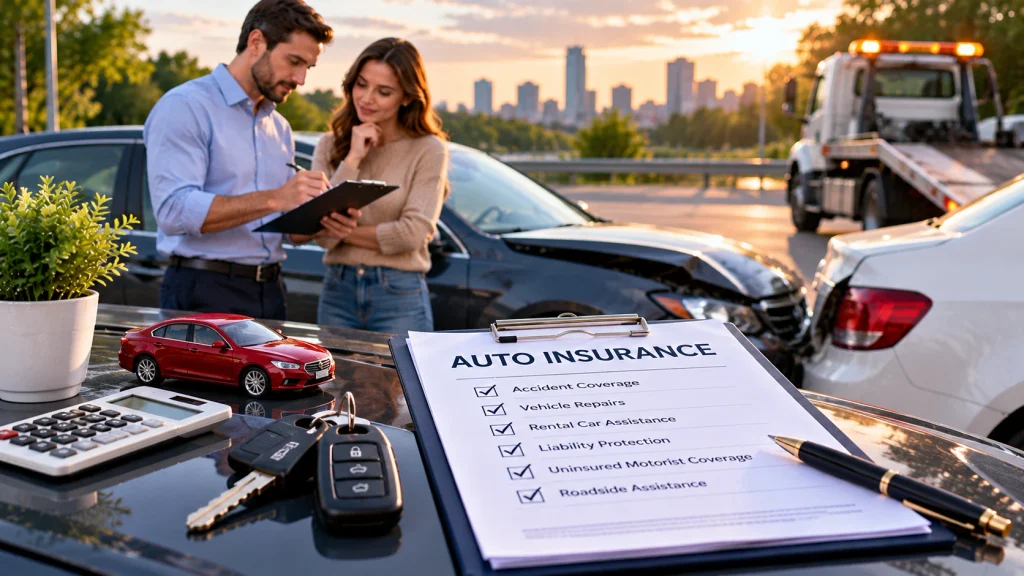
Auto insurance can help with several types of financial exposure, including:
- Injuries caused to other people in a covered accident.
- Damage to another person’s vehicle or property.
- Damage to your own vehicle from covered events.
- Certain medical expenses for you or your passengers.
- Qualifying losses involving uninsured or underinsured drivers.
Not every auto insurance policy includes all these protections. Some coverages may be required by state law, while others are optional or required under a vehicle financing or leasing agreement.
The NAIC Auto Insurance Guide provides additional information about coverage options and policy terms.
If you want to understand the basics of insurance coverage, premiums, deductibles, and policy terms, read our complete guide to The Complete Guide to Insurance in the USA.
What Are the Main Types of Auto Insurance Coverage?
Understanding the different coverage types is essential because each one addresses a particular risk. A policy that protects you against liability to other people may not pay for damage to your own vehicle.
1. Bodily Injury Liability Insurance
Bodily injury liability coverage generally helps pay eligible expenses when an insured driver is legally responsible for injuring another person in a covered accident.
Depending on the claim and applicable law, covered expenses may include medical bills, lost wages, and certain legal damages. The insurer may also provide a legal defense for covered claims according to the policy.
For example, suppose you cause a collision that injures another driver. Your bodily injury liability coverage may help pay that person’s eligible injury-related expenses, subject to your policy limits and conditions.
This coverage does not generally pay for your own injuries. Medical payments coverage, personal injury protection, health insurance, or other applicable coverage may address those expenses.
2. Property Damage Liability Insurance
Property damage liability insurance generally covers eligible damage you cause to someone else’s property in a covered accident.
The damaged property could include:
- Another person’s vehicle.
- A fence or wall.
- A building or garage.
- A streetlight or other fixed structure.
Suppose you accidentally hit another vehicle while reversing out of a parking space. If you are legally responsible, property damage liability coverage may help pay for the other vehicle’s eligible repair costs.
This coverage generally does not pay to repair your own car. Depending on the circumstances, collision coverage may address damage to your vehicle.
3. Collision Insurance
Collision coverage helps pay for covered physical damage to your insured vehicle resulting from a collision with another vehicle or object, or from a rollover, subject to the policy.
Examples may include:
- Hitting another vehicle.
- Colliding with a tree or guardrail.
- Hitting certain fixed objects.
- Damaging your vehicle in a covered rollover accident.
Collision coverage generally has a deductible. If the covered repair cost is lower than the deductible, there may be no payment from the insurer under that coverage.
Collision insurance is generally optional under state law, but a lender or leasing company may require it while you finance or lease a vehicle.
4. Comprehensive Insurance
Comprehensive coverage generally pays for covered damage to your vehicle caused by events other than a collision with another vehicle or object.
Depending on the policy, covered events may include:
- Vehicle theft.
- Fire.
- Vandalism.
- Hail or certain storm damage.
- Falling objects.
- Flood damage to the insured vehicle.
- Damage caused by striking certain animals.
Comprehensive coverage does not generally pay for routine maintenance, mechanical failure, or ordinary wear and tear.
Like collision coverage, comprehensive insurance usually has a deductible and is generally optional under state law, although financing or leasing agreements may require it.
5. Uninsured and Underinsured Motorist Coverage
Uninsured motorist coverage may help eligible insured people when an accident involves a driver who has no applicable insurance. Depending on the state and policy, it may also address qualifying hit-and-run situations.
Underinsured motorist coverage may apply when the at-fault driver’s liability limits are insufficient to cover eligible damages.
These coverages can be particularly important when an accident results in substantial medical expenses or other losses. Their availability, required status, limits, and treatment of property damage vary by state.
6. Personal Injury Protection and Medical Payments Coverage
Personal injury protection (PIP) and medical payments coverage (MedPay) can help pay certain medical expenses following a covered vehicle accident.
Personal injury protection (PIP) is associated with no-fault insurance systems. Depending on the state and policy, it may cover medical expenses, lost income, and certain other accident-related costs for eligible people, regardless of who caused the accident.
Medical payments coverage (MedPay) generally helps pay specified medical or funeral expenses for covered people after an accident, subject to the policy.
These coverages are not identical. Their availability, benefits, and requirements differ by state, so drivers should review the options applicable to their location.
7. Other Optional Auto Insurance Coverages
Some insurers offer additional coverage options that address specific situations.
- Rental reimbursement: May help pay eligible rental vehicle expenses while your insured vehicle undergoes covered repairs.
- Roadside assistance: May provide specified help for breakdowns, towing, lockouts, or similar situations.
- Gap insurance: May help cover the difference between an eligible vehicle’s insurance settlement and the outstanding loan or lease balance, subject to the contract.
- Glass coverage: May provide specified protection for windshield or other vehicle glass damage.
- Custom equipment coverage: May help cover qualifying aftermarket equipment, subject to policy limits.
- Rideshare coverage: May extend or supplement protection for eligible drivers working with rideshare platforms, depending on the insurer and policy.
Not every insurer offers every option. Before purchasing additional protection, check what your existing policy already covers.
Is Auto Insurance Required in Every US State?
Auto insurance requirements depend on state law. Most states require drivers to carry at least a minimum level of liability insurance or satisfy applicable financial-responsibility requirements to drive legally.
The required coverage and minimum limits are not identical nationwide. Some states also have specific requirements involving personal injury protection or uninsured motorist coverage.
Drivers should verify the current rules where their vehicle is registered rather than rely on a general national minimum.
What Is a Minimum Liability Requirement?
A minimum liability requirement is the minimum amount of qualifying financial protection a driver must maintain under applicable state law.
State requirements may specify separate limits for bodily injury per person, bodily injury per accident, and property damage per accident. These limits determine the maximum amount available under the relevant coverage for qualifying claims.
Meeting a legal minimum does not necessarily mean that a driver has sufficient protection for every serious accident. Losses exceeding the applicable limits may create additional financial exposure.
How Can You Check Your State’s Requirements?
To verify your requirements:
- Identify the state where your vehicle is registered.
- Visit that state’s official insurance department website.
- Review the current auto insurance or financial-responsibility requirements.
- Check whether PIP, uninsured motorist coverage, or other specific coverages are required.
- Confirm any additional requirements associated with your vehicle loan or lease.
The NAIC’s consumer resources can help you locate relevant insurance information. State-specific rules should always be verified using current official guidance.
What Factors Affect Auto Insurance Premiums?
An auto insurance premium is the amount paid to maintain coverage. Insurers calculate premiums using underwriting and rating methods that assess the risks associated with a policy.
The exact factors and their permitted use differ by state and insurer.
Driving Record
Accidents, traffic violations, and other driving-history information may influence premiums. Drivers with higher assessed risks may receive higher quotes than drivers with otherwise similar profiles.
Vehicle Type and Value
A vehicle’s repair costs, replacement value, safety features, theft risk, and claims history may affect the price of coverage.
A vehicle that is expensive to repair may cost more to insure under certain coverage types than a vehicle with lower repair costs.
Location
The area where a vehicle is primarily kept and driven can affect its insurance cost. Local accident frequency, theft, weather-related damage, repair costs, and other risk factors may influence rates.
Annual Mileage and Vehicle Use
Driving frequently can increase exposure to accidents. Insurers may consider annual mileage and whether a vehicle is used for commuting, personal travel, business activities, or other purposes.
Personal auto insurance may not cover every commercial or rideshare use. Drivers should disclose how they use their vehicles and confirm the appropriate coverage.
Age and Driving Experience
Age and driving experience may influence premiums where state law permits their use in rating. The effect varies by insurer and location.
Coverage Choices and Deductibles
Higher coverage limits generally increase the insurer’s potential financial responsibility and may affect premiums. Adding collision, comprehensive, rental reimbursement, or other optional protection can also change the price.
For coverages with deductibles, choosing a higher deductible may reduce the premium, but it increases the amount you may need to pay out of pocket for a covered loss.
Insurance History and Other Rating Factors
Depending on state law, insurers may consider prior coverage, claims history, or other permitted factors when calculating premiums.
No single factor determines every driver’s rate. Insurers use different rating methods, so two companies may quote different prices for similar coverage.
What Are Premiums, Deductibles, and Coverage Limits?
Three policy terms are particularly important when comparing auto insurance options.
Premium
The premium is the amount you pay to maintain your insurance policy. Payment schedules and available payment methods depend on the insurer and contract.
A lower premium is not automatically a better deal. You should also compare coverage limits, deductibles, exclusions, and benefits.
Deductible
A deductible is the amount you are responsible for under a particular coverage when a deductible applies to a covered claim.
For example, suppose a covered collision repair costs $3,000 and your applicable collision deductible is $500. If the entire repair is eligible and no other adjustments apply, the insurer would pay $2,500 and you would pay $500.
This is a simplified example. Actual settlements depend on the policy, damage assessment, and claim circumstances.
Liability coverage generally does not work like collision or comprehensive coverage with a standard deductible paid by the insured for their own vehicle damage.
Coverage Limits
Coverage limits specify the maximum amount an insurer will pay under particular coverage provisions, subject to the policy.
Liability policies may have separate limits for bodily injury per person, bodily injury per accident, and property damage. Other coverages may have their own limits and conditions.
A policy with low limits may leave you responsible for eligible costs that exceed those limits.
What Does Full Coverage Mean?
The phrase “full coverage” is commonly used to describe an auto policy that combines liability coverage with collision and comprehensive coverage.
However, it is not a universal guarantee that every possible loss is covered. A policy described as full coverage may still exclude certain events, have deductibles, and impose limits.
Always review the actual policy rather than rely on the phrase alone.
How to Compare Auto Insurance Policies
Comparing policies carefully can help you understand what you are paying for.
Compare Equivalent Coverage
Request quotes using the same coverage limits, deductibles, insured drivers, vehicle details, and policy terms whenever possible.
If one quote has a lower premium but substantially lower limits, the prices are not directly comparable.
Review the Declarations Page
The declarations page summarizes important policy information, which may include:
- Named insureds and covered vehicles.
- Policy effective and expiration dates.
- Selected coverages.
- Coverage limits and deductibles.
- Premium information.
- Lender or loss-payee information, when applicable.
Read the full policy for exclusions, conditions, and additional details not fully explained on the declarations page.
Check the Insurer’s Licensing and Complaint Information
Confirm that the insurer is authorized to operate in the relevant state. Your state insurance department may also provide consumer complaint information and other resources.
Ask About Available Discounts
Insurers may offer discounts for qualifying circumstances, such as multiple vehicles, certain safety features, eligible driving courses, or bundled policies.
Discount availability and eligibility vary. Ask the insurer to explain which discounts apply to your circumstances.
Review the Overall Value
Consider customer service, claims procedures, coverage options, financial strength information, and premium costs together. The cheapest policy may not be the most suitable option for your needs.
How Does the Auto Insurance Claims Process Work?
An auto insurance claim is a request for payment under an insurance policy following a covered event.
The exact procedure depends on the accident, coverage, insurer, and state.
Step 1: Prioritize Safety
Move to a safe location when possible, check for injuries, and contact emergency services when necessary. Follow applicable reporting requirements.
Step 2: Document the Accident
When safe and appropriate, record relevant details, take photographs, exchange information with the other driver, and obtain witness details if available.
Avoid making unsupported statements about fault. Provide accurate information when communicating with insurers or authorities.
Step 3: Notify the Appropriate Insurer
Report the accident promptly according to your policy’s instructions. Depending on the circumstances, you may need to contact your insurer, the other driver’s insurer, or both.
Step 4: Provide Supporting Documents
The insurer may request photographs, repair estimates, accident reports, medical records, or other evidence relevant to the claim.
Keep copies of documents and records of important communications.
Step 5: Cooperate With the Investigation
The insurer may inspect the vehicle, assess the damage, review liability, and determine whether the loss falls within the applicable coverage.
Step 6: Review the Settlement
If the claim is approved, review the settlement amount, deductible, coverage limit, and any other adjustments. If the claim is denied or you disagree with the amount, ask for a written explanation and review the policy’s dispute procedures.
State law may provide additional rights or complaint options. Contact your state insurance department if you need help understanding the available process.
Common Auto Insurance Mistakes to Avoid
Drivers can reduce confusion and unexpected financial exposure by avoiding these common mistakes.
- Buying only the minimum required coverage without assessing other risks: Legal minimums may not cover every potential loss.
- Confusing liability coverage with protection for your own car: Liability generally addresses covered claims against you, while collision and comprehensive address specified damage to your vehicle.
- Assuming comprehensive coverage includes every disaster: The exact covered events and exclusions depend on the policy.
- Choosing a deductible you cannot afford: Consider whether you could pay the deductible after a covered loss.
- Providing inaccurate information: Incorrect details about drivers, vehicle use, mileage, or other application information may create problems.
- Ignoring policy exclusions: Read the contract to understand limitations and situations where coverage may not apply.
- Failing to report changes: Moving, adding a driver, changing vehicle use, or replacing a vehicle may affect your policy.
- Missing payment deadlines: Failing to make required payments may affect coverage or lead to cancellation under applicable rules.
- Assuming every insurer offers the same benefits: Coverage options, prices, and conditions can vary substantially.
Reviewing your policy periodically can help ensure that your coverage remains suitable as your circumstances change.
Frequently Asked Questions About Auto Insurance in the USA
1. What type of auto insurance is required in the USA?
Most states require drivers to maintain minimum liability insurance or satisfy applicable financial-responsibility requirements. Some states impose additional requirements. Check the current rules through the insurance department for the state where your vehicle is registered.
2. What is the difference between collision and comprehensive insurance?
Collision coverage generally pays for covered damage to your vehicle resulting from a collision with another vehicle or object, or a rollover. Comprehensive coverage generally addresses specified non-collision losses, such as theft, fire, vandalism, or certain weather-related damage. Both typically have separate deductibles.
3. Does auto insurance cover damage to my own car?
It depends on the coverage you purchased and the circumstances of the loss. Collision coverage may address eligible collision damage, while comprehensive coverage may cover specified non-collision events. Liability coverage generally addresses covered damage or injuries for which you are legally responsible to other people.
4. What is the difference between a premium and a deductible?
A premium is the amount paid to maintain the policy. A deductible is the amount you are responsible for under a particular coverage when it applies to a covered claim. Premiums are paid according to the policy’s schedule, while deductibles generally become relevant when a qualifying claim occurs.
5. How can I compare auto insurance policies effectively?
Compare quotes using equivalent coverage limits, deductibles, drivers, and vehicle details. Review exclusions, optional benefits, insurer licensing, claims procedures, and available discounts. Your state insurance department and the NAIC can provide consumer information to help you make an informed comparison.
Conclusion
Auto insurance in the USA helps drivers manage financial risks associated with vehicle accidents, injuries, property damage, theft, and other covered events. Understanding liability, collision, comprehensive, medical, and uninsured motorist coverage makes it easier to evaluate what a policy does and does not protect.
Before selecting coverage, compare equivalent policy options, check your state’s requirements, consider your financial exposure, and review the terms carefully. Premiums alone do not tell the full story: deductibles, coverage limits, exclusions, and claims procedures are equally important to understanding the protection a policy provides.
Because insurance requirements and policy terms vary, use this guide as a starting point and consult your state insurance department or a qualified insurance professional for questions about your specific circumstances.
Authoritative Sources and Further Reading
- National Association of Insurance Commissioners (NAIC): Auto Insurance
- NAIC: Consumer Resources
- Insurance Information Institute (III): What Is Covered by a Basic Auto Insurance Policy?
- Insurance Information Institute (III): What Is Covered by Collision and Comprehensive Auto Insurance?
Editorial disclaimer: This article is for general educational purposes only and does not provide individualized insurance, legal, or financial advice. State requirements, policy provisions, coverage availability, and claim outcomes vary. Consult the applicable policy documents and relevant state authorities for specific guidance.
One Comment